The Ancient Jewish Ghetto Tour
2 hours and 30 minutes – Easy
2 hours and 30 minutes – Easy
Explore Europe’s first officially established Jewish Ghetto—a place of restriction and segregation that became an influential centre of faith, scholarship and cultural resilience.
Shakespeare’s Venice: The Real Ghetto Behind Shylock’s Words
“Hath not a Jew eyes? If you prick us, do we not bleed?”
Shylock’s famous words in Shakespeare’s The Merchant of Venice continue to resonate as a powerful appeal for human dignity.
Although Shakespeare probably never visited Venice, the society behind his play was real: a wealthy international republic where Christians and Jews lived in close economic contact while remaining separated by religious and legal restrictions.
Join a private guided walk through the Venetian Jewish Ghetto and move beyond Shakespeare’s fictional character to discover the real people who lived behind its gates.
Explore a district shaped by faith, hardship, scholarship and resilience, where merchants, physicians, rabbis, printers and families created one of Europe’s most important Jewish communities.
The Birth of the Venetian Ghetto
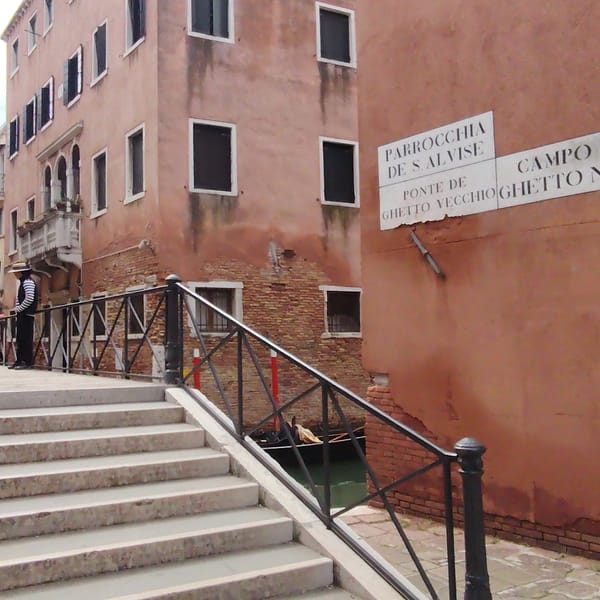
In 1516, the Venetian Senate ordered Jewish residents to live within an enclosed area known as the Ghetto Nuovo.
The word “ghetto,” now used worldwide, originated in Venice and was connected to an earlier metal foundry, or getto, located in the area.
Gates were locked from sunset until morning, and guards watched the entrances while boats patrolled the surrounding canals. During the day, residents could leave for permitted work, but their professions and public appearance remained regulated.
At different times, Jewish residents were required to wear distinctive signs or coloured headwear that made their identity visible outside the Ghetto.
Despite these restrictions, the community became an important part of Venetian commercial and intellectual life.
Daily Life and the Five Synagogues
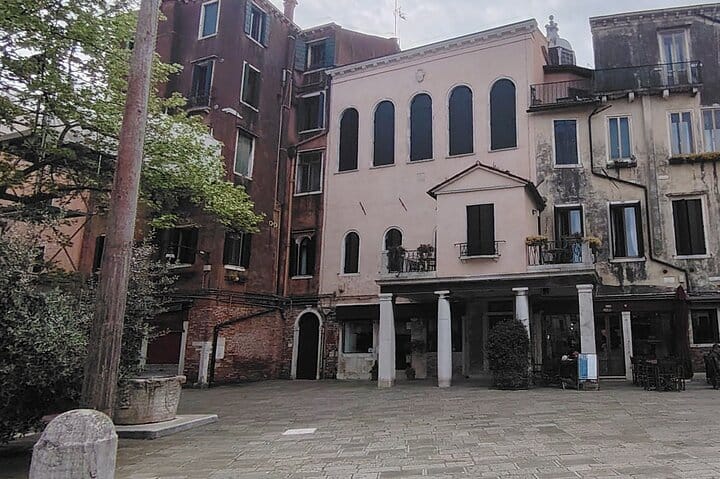
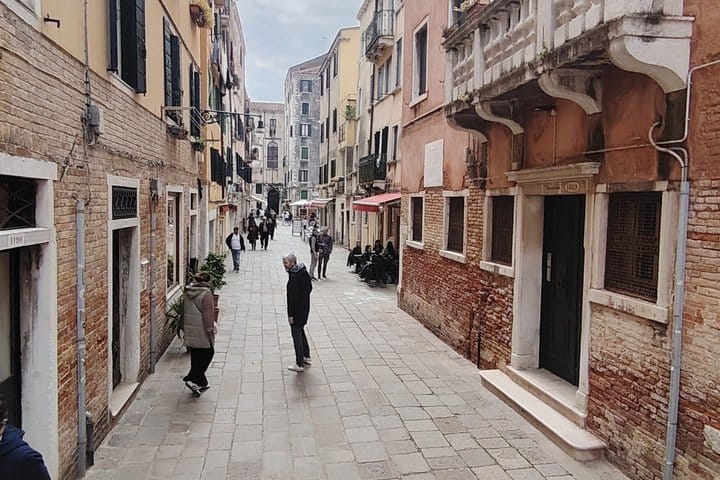
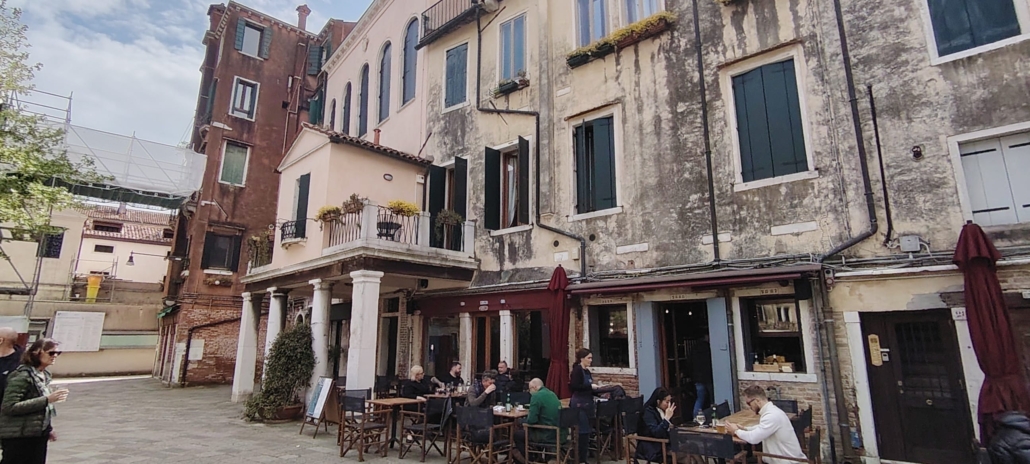
Because residents could not expand beyond the boundaries of the Ghetto, buildings rose upwards, creating some of the tallest and most distinctive houses in Venice.
Within this confined space, the community established schools, charities, study rooms and five historic synagogues.
German, Italian, Levantine and Spanish Jewish communities brought different languages, customs and religious traditions to Venice.
Their synagogues were discreetly located on the upper floors of apparently ordinary buildings. The Spanish Synagogue, with its elegant Baroque character, and the Levantine Synagogue, connected with merchants from the Eastern Mediterranean, are among the most impressive.
When access is available, visits to the synagogues and secret garden provide a rare opportunity to discover the spiritual heritage concealed behind the Ghetto’s simple façades.
Shakespeare and the Real Shylock
Shakespeare wrote The Merchant of Venice only decades after the establishment of the Ghetto.
His fictional Shylock has been interpreted as a villain, victim, outsider and man demanding recognition of his humanity.
During the tour, his words introduce a wider discussion about prejudice, moneylending, Venetian law and the complicated relationship between the Christian majority and Jewish minority.
The play is not a documentary account of Jewish life. By walking through the real Ghetto, we can separate theatrical stereotypes from the experiences of the historical community.
Daniel Bomberg and the Printed Talmud
Renaissance Venice became one of Europe’s most important centres of Hebrew printing.
Discover the remarkable story of Daniel Bomberg, a Christian printer from Antwerp who worked with Jewish rabbis, editors and scholars in Venice.
Between 1520 and 1523, his press produced the first complete printed edition of the Babylonian Talmud.
Its page design placed the central text beside important rabbinical commentaries. This arrangement became so influential that its structure and pagination continue to shape Talmudic editions today.
The story reveals one of Venice’s great contradictions: Jewish residents faced segregation and restrictions, yet Jewish knowledge helped make the city a beacon of scholarship and cultural exchange.
Resilience and Remembrance
The Ghetto’s history is not only a story of discrimination. It is also a history of creativity, faith, dignity and resilience.
After the fall of the Venetian Republic in 1797, the gates were removed, but discrimination did not disappear.
During the Nazi occupation, members of Venice’s Jewish community were arrested and deported.
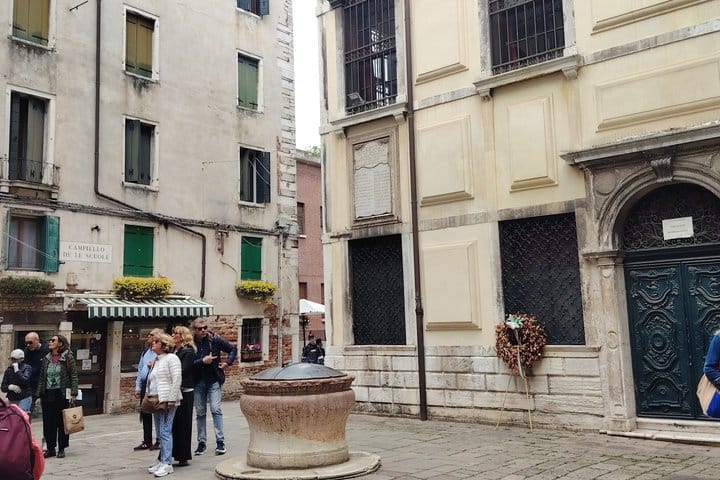
In Campo del Ghetto Nuovo, see the powerful Holocaust memorials created by Arbit Blatas. His bronze relief The Last Train evokes the railway transports that carried Venetian Jews towards concentration and extermination camps.
The rough forms and blurred figures preserve the memory of those who were taken away and bring the story of the Ghetto into the modern era.
The Jewish Ghetto Today
The Ghetto remains home to Venice’s Jewish religious and administrative institutions and to a small but active community.
Its synagogues, houses, memorials and public spaces connect more than five centuries of Jewish life.
This is not simply an open-air museum. It remains a living place of worship, remembrance, education and cultural identity.
Key Highlights
- Private guided tour of the Venetian Jewish Ghetto
- History of the Ghetto’s establishment in 1516
- Stories of the gates, curfew and identifying signs
- Discover the German, Italian, Levantine and Spanish communities
- Learn about the five historic synagogues
- Possible synagogue and secret-garden visit, subject to access arrangements
- Discuss Shakespeare’s Shylock
- Discover Daniel Bomberg and the printed Babylonian Talmud
- See Arbit Blatas’s Holocaust memorials and The Last Train
- Explore themes of faith, identity, scholarship and resilience
- Historical explanations and photography stops
A Lasting Legacy
Shakespeare gave the world the fictional Shylock. The real Venetian Ghetto reveals generations of people who protected their faith, exchanged ideas and enriched Venetian culture despite the restrictions imposed upon them.
Their history transformed a place of segregation into an enduring symbol of cultural identity, human dignity and resilience.
Join this private Ancient Jewish Ghetto Tour and discover the real history behind Shakespeare’s Venice.
What’s included?
Guided tour in the English language.
2:30 hours tours
Photo stops.
Exclusions
Entry or admission fee
Entrance fees are not included.
Explanation inside the synagogue is not allowed.just outside.
Food/Drinks
Any personal expenses
Transportation.
Please note
Wheelchair users
People with altitude sickness
Babies under 1 year
People over 90 years old
Customers may write mail in case of necessity.
Synagogues are closed saturdays