A Private Venice Guide’s Evening Odyssey of Myths & Mysteries
2 hours and 30 minutes
Dive into Venice’s mysterious twilight with a private journey through hidden scandals, dark legends, and untold stories beneath the city’s golden beauty.
Tour Overview: The Story of the Night
When the sun disappears beyond the lagoon and the last daylight fades from the façades, Venice undergoes a remarkable transformation.
The familiar city of elegant palaces and picturesque canals becomes a landscape of silent bridges, narrow passageways and moving reflections. This is when Secret Venice awakens—a city shaped not only by beauty and power, but also by crime, scandal, superstition and mystery.
This is no ordinary evening walk. It is an immersive journey through the darker imagination of the Serenissima, where documented history meets folklore and every shadow appears to conceal another story.
Led by a licensed local guide and Venetian historian, follow lantern-lit streets through Santa Croce, San Polo, Rialto and Cannaregio. Discover tales preserved in street names, carved stones, abandoned doorways and popular traditions passed from one generation to another.
Encounter the legendary figure of Giacomo Casanova, hear the disturbing story of Biasio the Butcher, enter the former pleasure district of the Carampane, and explore the strange beliefs that once influenced Venetian responses to disease, crime and death.
Venice’s ghosts are not always supernatural. Some are echoes of prisoners, merchants, courtesans, doctors and ordinary citizens whose lives disappeared but whose stories remain embedded within the city.
Tour Highlights
- Explore Venice after dark with a licensed local guide and Venetian historian
- Discover the disturbing legend of Biasio the Butcher
- Enter the historic underworld of the Castelletto and Carampane
- Hear stories of Casanova, courtesans and forbidden encounters
- Discover Venice’s early Anatomy Theatre
- Learn about plague doctors, medicine and popular superstition
- Cross atmospheric Campo San Polo and explore its Carnival history
- Experience Rialto’s merchant empire without the daytime crowds
- Conclude beside the illuminated monuments of St. Mark’s Basin
- Receive recommendations for traditional Venetian bacari
Duration
2–2.5 hours, with a flexible pace
Atmosphere
Atmospheric, intellectual, mysterious and exclusive
Perfect For
Curious travellers who want to discover Venice’s hidden stories, unsettling legends and forgotten characters away from the conventional tourist routes.
Tour Itinerary
1. The Threshold of Mystery – San Simeone Piccolo
Your journey begins at Fondamenta San Simeone, overlooking the Grand Canal as twilight settles across the water.
Opposite the railway station rises the monumental dome of San Simeone Piccolo, one of the city’s most distinctive churches. Its classical façade and dramatic position create an impressive gateway between modern Venice and the mysterious city waiting beyond.
Here, your guide introduces Venice as a place built between opposing forces: land and water, sacred devotion and political ambition, public magnificence and private secrecy.
Enter the winding streets of Santa Croce, where the noise of the transport terminals gradually disappears. The streets become narrower, the canals quieter and the light more uncertain.
As footsteps echo beneath covered passageways, learn how Venetians historically interpreted darkness, unexplained noises and sudden changes in the lagoon. In a city where fog could erase entire buildings within minutes, superstition often provided an explanation for what could not be seen or understood.
2. Crime & Punishment in Rialto – Biasio the Butcher
Continue towards Venice’s ancient commercial heart: Rialto.
During the day, Rialto is filled with visitors, market activity and views of the Grand Canal. At night, its empty arcades and darkened market stalls evoke a very different world.
Hear the chilling legend of Biasio the Butcher, whose name survives in the Venetian location known as Riva de Biasio. According to popular tradition, Biasio prepared food for sailors and workers—but his success concealed a horrifying secret.
Your guide will separate the known historical setting from the darker details added through centuries of storytelling. Whether every element is true or not, the legend reveals how Venetians transformed crime into public memory and moral warning.
Discover the severity of justice under the Venetian Republic and hear about the feared executioner traditionally associated with the Hangman’s House.
At the Gobbo di Rialto, learn how this small stone figure became connected with official proclamations, public punishment and anonymous political satire. Near the commercial centre of the Republic, words could be nearly as dangerous as weapons.
Rialto was not only a romantic bridge. It was the financial engine of a merchant empire—competitive, wealthy and sometimes ruthless. Experienced after dark, its silent banks and arcades reveal the atmosphere of power that daylight often conceals.
3. The Venetian Underworld – Castelletto and Carampane
Enter the former pleasure districts of Castelletto and Carampane, once closely connected with Venice’s regulated world of prostitution.
The Republic attempted to supervise this activity through designated areas, official rules and public controls. Behind that administrative system lived real women whose lives were shaped by poverty, independence, exploitation, fashion and survival.
The name Carampane is traditionally linked to the houses once belonging to the powerful Rampani family. Over time, the district became associated with courtesans, brothels and discreet encounters.
Discover the story behind the provocatively named Ponte delle Tette and learn how Venetian authorities sometimes used public displays and regulations to influence behaviour within the district.
Not every Venetian courtesan occupied the same social world. Some lived in hardship, while celebrated cortigiane oneste could be educated women connected with poetry, music, politics and elite society.
This is also the ideal setting in which to encounter Giacomo Casanova. More than a legendary seducer, Casanova was a writer, traveller, gambler and intellectual whose adventures exposed the freedoms and contradictions of 18th-century Venice.
Through stories of secret meetings, disguises and forbidden relationships, the streets of Carampane reveal a Venice where pleasure and surveillance existed side by side.
4. Science, Plague & Superstition – The Anatomy Theatre
Continue to the haunting location associated with Venice’s 1671 Anatomy Theatre.
In an age when the human body remained surrounded by religious anxiety and popular fear, public anatomical study offered physicians and students a rare opportunity to investigate its hidden structure.
Your guide will reconstruct the atmosphere of these demonstrations and explain how medicine, scientific curiosity and spectacle came together in early modern Venice.
The discussion then turns to the plague epidemics that repeatedly threatened the city. As an international trading power, Venice understood that ships carrying wealth could also bring invisible disease.
Learn about the distinctive clothing associated with the plague doctor, including the famous beaked mask, and discover how aromatic herbs, medical theories and protective garments were used in attempts to resist infection.
Alongside official medicine survived a world of charms, symbols and superstitions. Certain objects were believed to repel evil, while prayers and protective signs offered comfort against forces that remained poorly understood.
This stop reveals Venice at the boundary between science and superstition, when rational observation began to challenge ancient fears but could not entirely replace them.
5. Carnival & the Shadows of Campo San Polo
Enter the expansive Campo San Polo, one of the largest public squares in Venice.
Today it appears peaceful, but for centuries it hosted ceremonies, games, markets, performances and spectacular public entertainments. The square witnessed bull hunts, large gatherings and Carnival celebrations that transformed social behaviour.
During the Venice Carnival, masks offered temporary freedom from ordinary identity. Behind the disguise of the bauta, moretta or other traditional masks, social distinctions became less visible and conversations more daring.
Nobles, merchants, foreigners and ordinary Venetians could enter a world of performance in which appearance could not always be trusted. A mask offered anonymity—but anonymity also created opportunities for gambling, secret romance, deception and crime.
Hear how Carnival developed into much more than a public festival. For months, Venice became a European capital of theatre, music, gaming and pleasure, attracting travellers eager to experience freedoms unavailable elsewhere.
Campo San Polo also carried a darker reputation. Public festivities could turn violent, and the same open space that hosted celebration could become a setting for conflict and punishment.
Leave the square through narrow calli, where pools of lamplight appear and disappear against the walls. Here, ordinary architectural details—an enclosed doorway, a carved face or an empty window—become part of Venice’s nocturnal theatre.
6. Grand Finale – St. Mark’s Basin at Night
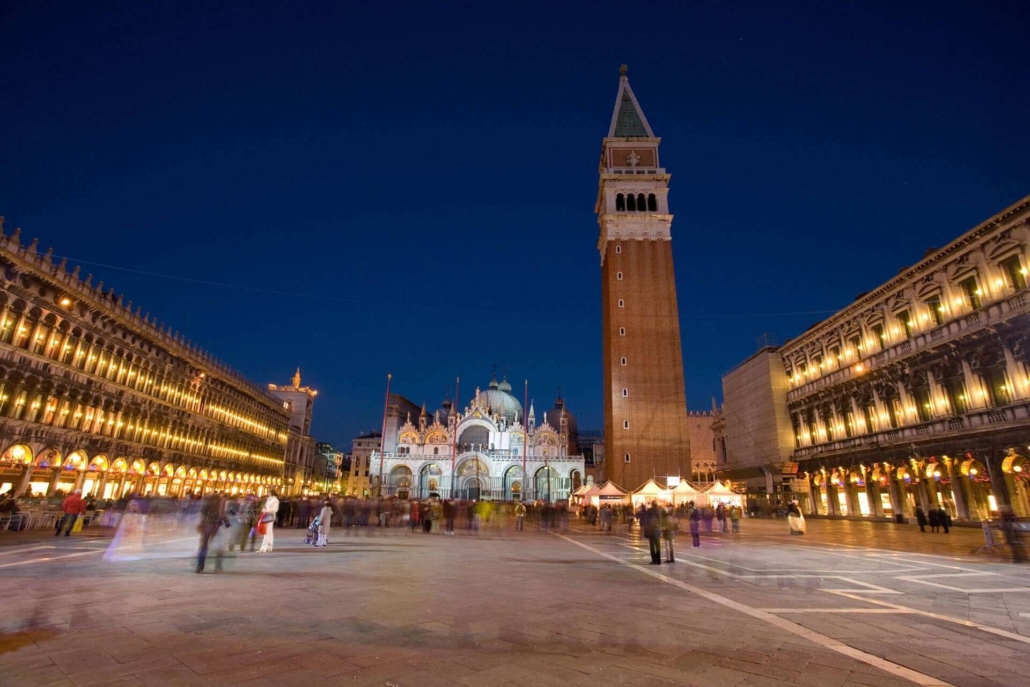
The experience concludes beside the magnificent St. Mark’s Basin, where Venice presents its most powerful and theatrical panorama.
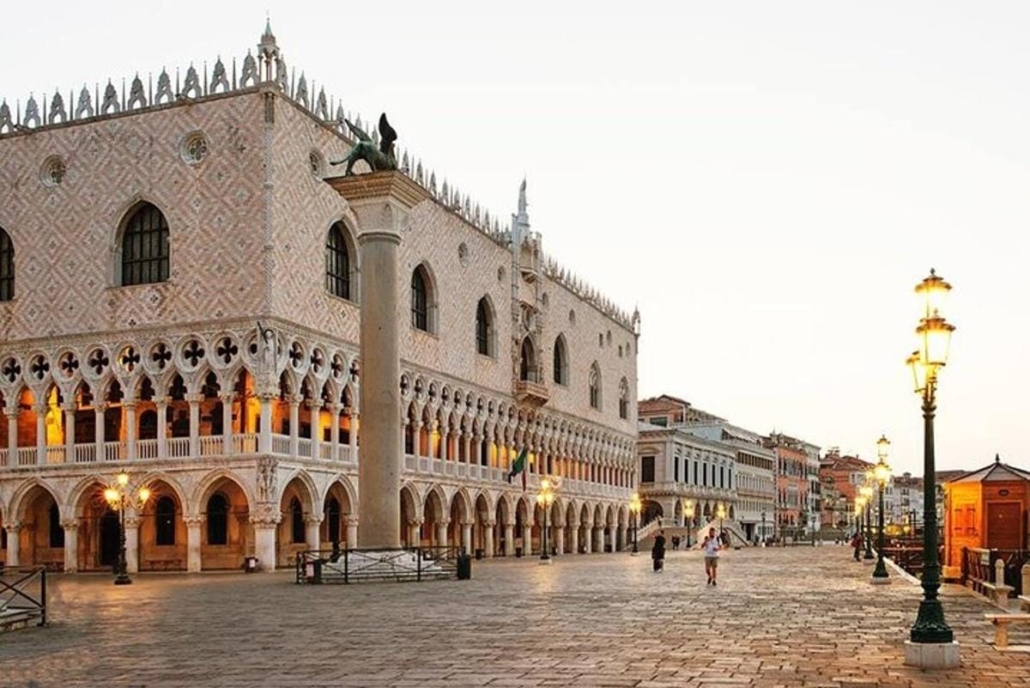
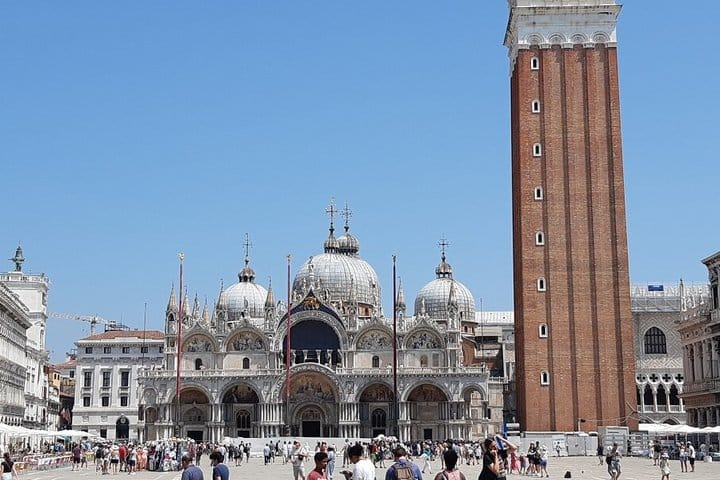
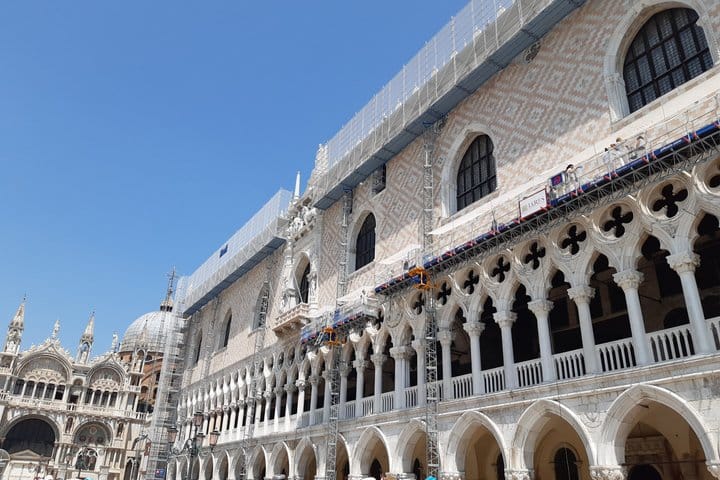
Under the night sky, the illuminated Doge’s Palace, Campanile, columns of St. Mark and St. Theodore, and the domes of the basilica appear to float between stone and water.
Across the basin, the silhouette of San Giorgio Maggiore rises from the darkness while reflections move across the lagoon.
This was the ceremonial entrance to the Venetian Republic—the view intended to impress ambassadors, merchants and rulers arriving from the sea. By night, when the crowds diminish, its political symbolism becomes even more striking.
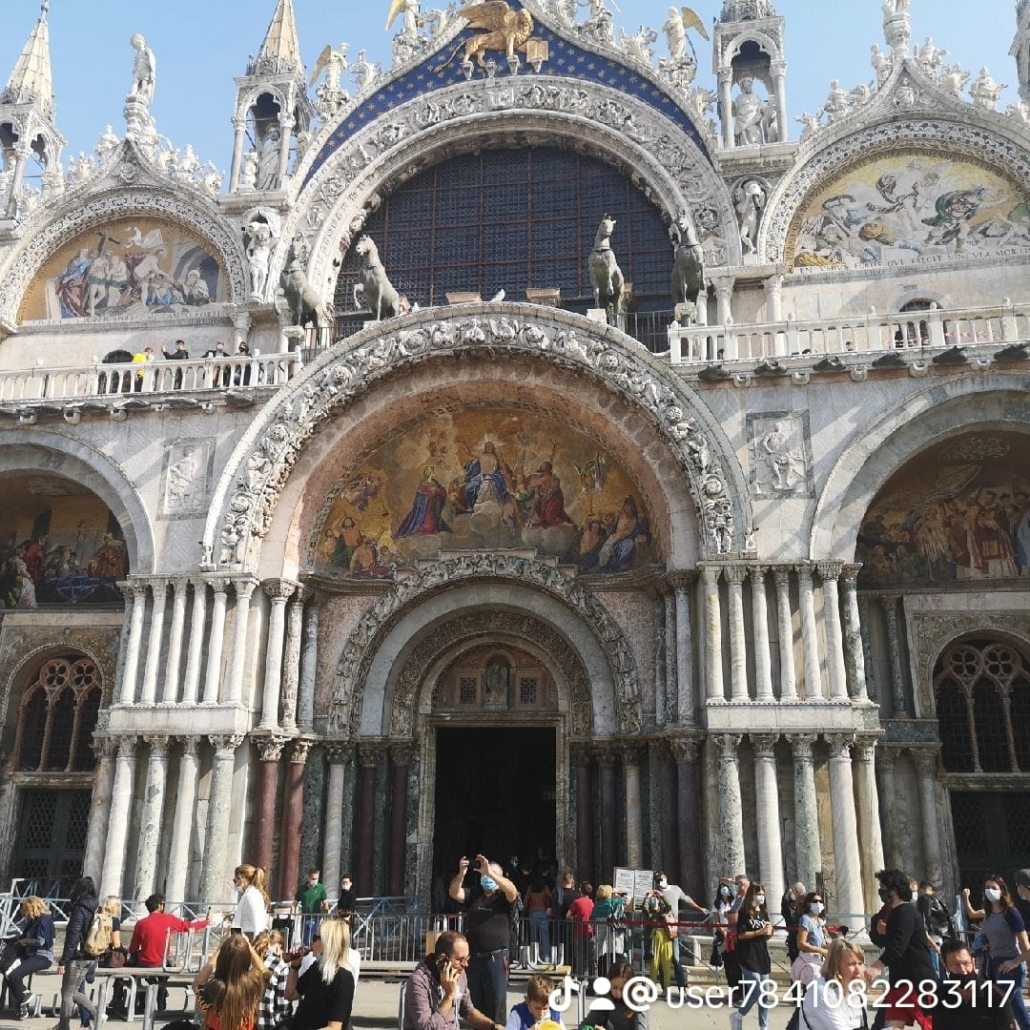
Hear the final legends associated with St. Mark’s Square and discover how the Republic carefully controlled public ceremony, justice and appearance within its most important space.
The tour concludes with personalized recommendations for traditional bacari, where you may continue your evening with a glass of wine and a Venetian cicchetto.
“Many travellers see the Rialto Bridge and think only of romance. To a Venetian historian, it represents the centre of a merchant empire that was as competitive and ruthless as it was magnificent. At night, without the crowds, its power becomes easier to understand.”
Ready to Explore Venice After Dark?
Follow Venice into the shadows, uncover stories hidden behind its beautiful façades and experience the city through the lives of merchants, courtesans, criminals, doctors and adventurers.
This is more than a ghost tour. It is a journey through the legends, mysteries and unsettling truths of Venice at night—a city whose most fascinating stories begin after darkness falls.
What’s included?
English tour guide
02:30 Minutes walking guided tour
Exclusions
Tip or gratuity
Food & drinks
Goods & services tax
Please note
This tour is not for people people with impaired mobility
Stroller
No wheelchair