The Venetian Sovereignty: A 7-Hour Private Historian’s Commission
7 hours
A private seven-hour odyssey through the secret geography of the Venetian Lagoon. Led by a licensed Venice guide and local historian aboard a luxury Riva Aquariva, this experience reveals Venice’s maritime empire, island communities, ancient craftsmanship and hidden viticulture in complete privacy.
A Day of Absolute Exclusivity Aboard a Luxury Riva Aquariva
Venice has two faces: the monumental city presented to the world and the more intimate lagoon known to those who understand its liquid origins.
This seven-hour private commission is designed for travellers seeking much more than a conventional sightseeing tour. It is a carefully curated journey through the geopolitical, artistic, maritime and social history of the Serenissima, connecting the ceremonial heart of Venice with the distant islands and fragile landscapes that made its survival possible.
Travel aboard an elegant Riva Aquariva, accompanied by your private captain and a licensed Venice guide and local historian. The motorboat provides the freedom to move comfortably between distant points of the lagoon, but the true luxury lies in the experience itself: extraordinary places, historical insight, complete privacy and time to appreciate Venice beyond the crowds.
The Vessel: Riva Aquariva
The Riva Aquariva is an icon of Italian nautical design, combining polished mahogany, refined leatherwork, graceful lines and powerful performance.
Its comfort and speed make it ideal for an extensive exploration of the Venetian Lagoon, allowing you to travel effortlessly between the historic centre, southern lagoon and northern islands.
Rather than becoming the focus of the day, the Riva serves as your private moving salon—a sophisticated and comfortable way to reach landscapes, islands and historic sites that reveal the wider story of Venice.
I. St. Mark’s Basin: The Theatre of Venetian Power
Your journey begins from your hotel’s private pier, when accessible, before entering the magnificent Bacino di San Marco.
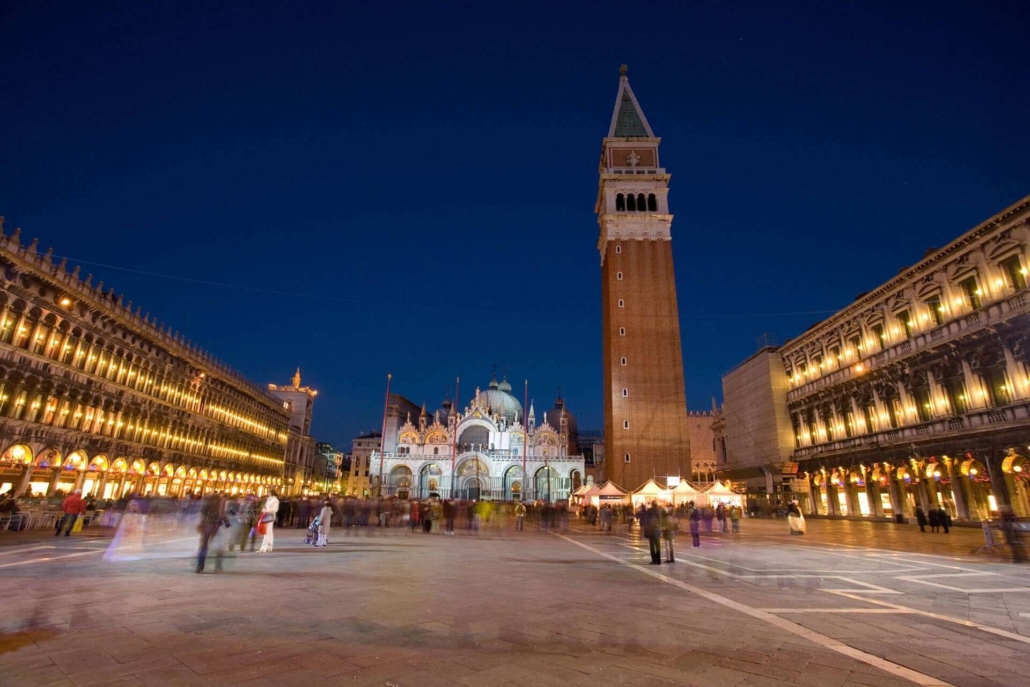
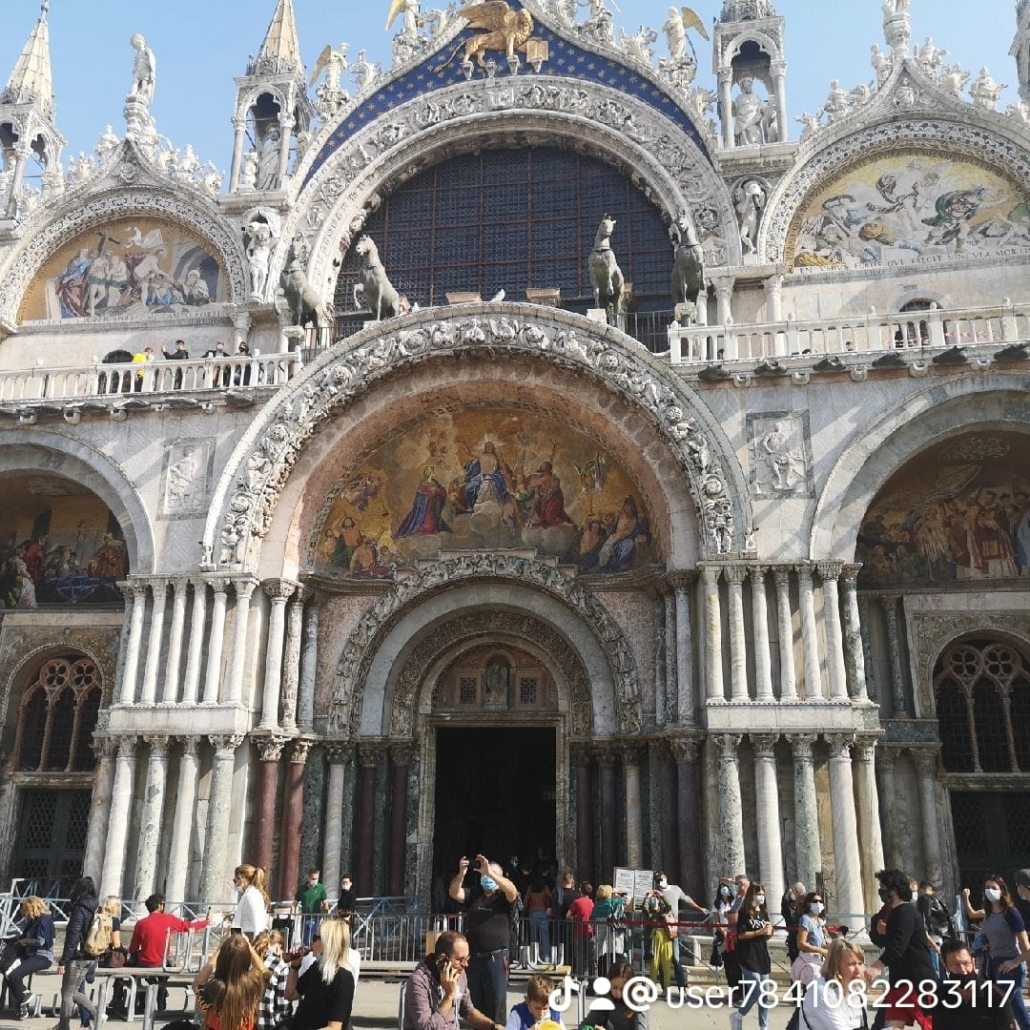
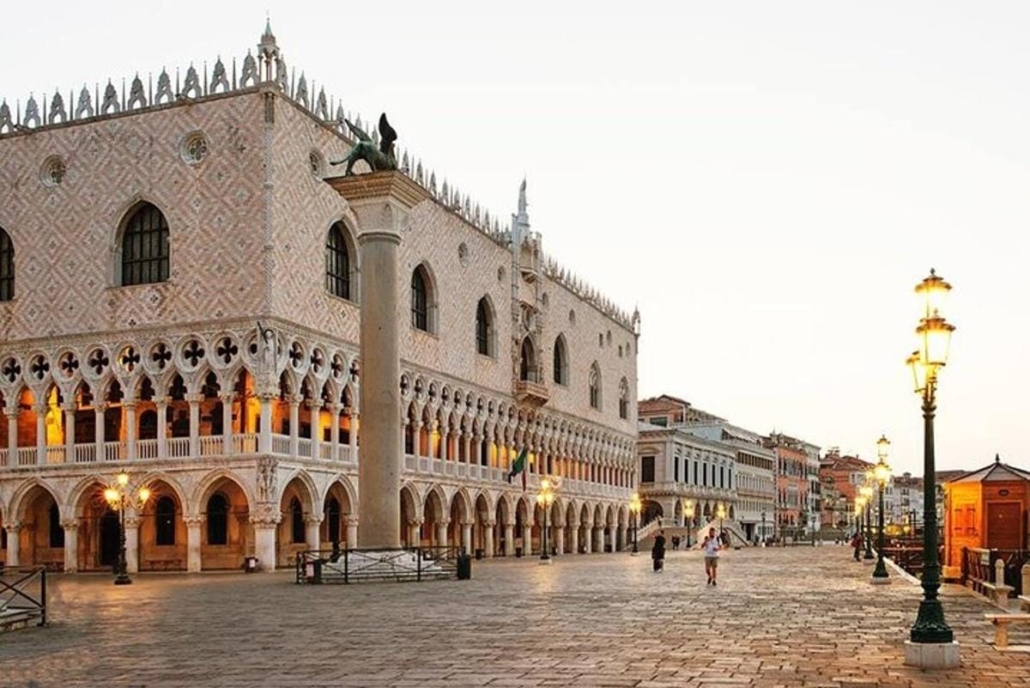
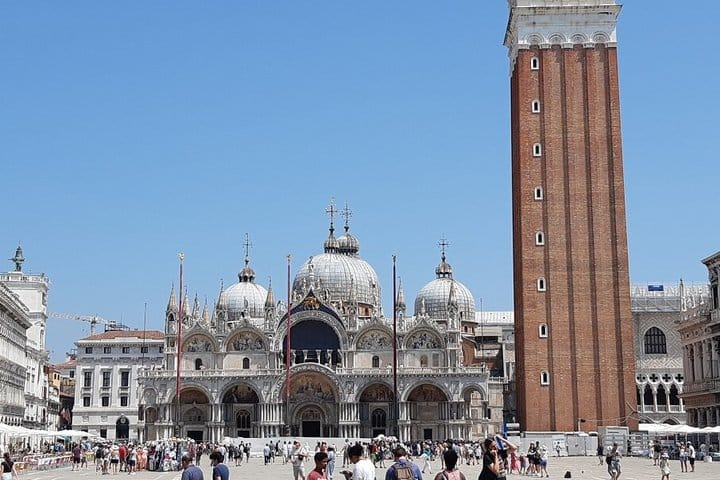
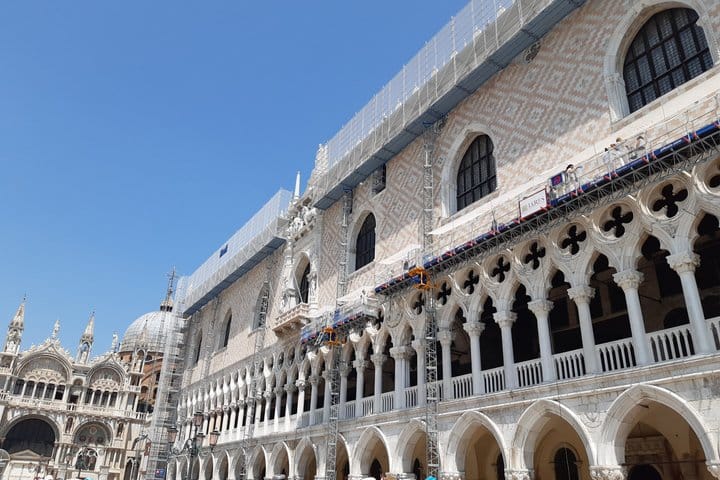
From the water, Venice presents the ceremonial image created to impress ambassadors, merchants and rulers arriving from across the Mediterranean. Admire the waterfront façade of the Doge’s Palace, the columns of St. Mark and St. Theodore, the Campanile and the domes of St. Mark’s Basilica rising behind them.
Across the basin, the harmonious façade of San Giorgio Maggiore reflects the architectural vision of Andrea Palladio. Towards the entrance of the Grand Canal, the dome of Santa Maria della Salute and the triangular point of the Punta della Dogana recall Venice’s connection with commerce, faith and the sea.
Here, your guide will reconstruct the theatre of Venetian sovereignty: a republic that used architecture, ceremony and water to project an image of stability, magnificence and political power.
II. The Arsenal and Venice’s Maritime Empire
Continue towards the monumental walls and towers of the Venetian Arsenal, viewed from the surrounding waterways.
The Arsenal was the industrial and naval heart of the Republic. Within this vast protected complex, skilled shipwrights, rope makers, carpenters and metalworkers constructed and equipped the fleets that defended Venetian trade routes.
Learn how Venice organized shipbuilding on an extraordinary scale, developing highly coordinated production methods centuries before the modern industrial age.
From this privileged waterside perspective, understand how naval technology, state organization and control of maritime routes enabled a city built in a lagoon to become one of the Mediterranean’s greatest powers.
III. The Southern Lagoon: Islands of Defence, Health and Memory
As the monumental city recedes, enter the broader landscape of the southern Venetian Lagoon.
The skyline opens into an environment of water, channels, navigation markers and distant islands. Your guide will explain how the lagoon functioned as Venice’s natural defence system while remaining a delicate ecosystem requiring constant knowledge and management.
Cruise near the haunting silhouette of Poveglia, viewed from the boat. Its history provides an opportunity to explore Venice’s response to epidemics and the development of quarantine and public-health controls within an international trading empire.
Venice understood that commercial prosperity also brought danger. Ships, passengers and merchandise arriving from distant ports could carry disease, and the Republic created an organized system of isolation, inspection and prevention across different lagoon islands.
The stories surrounding Poveglia combine documented history with darker legends, allowing your historian to separate fact from folklore while revealing the island’s atmosphere and complex past.
IV. The Lido and the Belle Époque Horizon
Continue alongside the Lido of Venice, the long barrier island separating the lagoon from the Adriatic Sea.
The Lido played a strategic role in protecting Venice’s internal waters, while its entrances connected the Republic with the open sea and international trade routes.
During the 19th and early 20th centuries, the island acquired a new identity as one of Europe’s most fashionable seaside destinations. Elegant hotels, private beaches and grand villas attracted aristocrats, artists, writers and international travellers.
Discover how Venice transformed itself after the fall of the Republic, becoming a sophisticated destination for the European elite. The Lido later became internationally associated with cinema through the Venice Film Festival, reinforcing the city’s enduring relationship with glamour, culture and performance.
V. Crossing the Living Lagoon
As you travel north, observe the lagoon as a living geographical system rather than empty water between islands.
Follow navigable channels marked by wooden bricole, passing salt marshes, mudflats and areas of shallow water whose appearance changes with the tides and light.
These fragile environments support birds, fish and plant life while protecting the lagoon’s ecological balance. For generations, fishermen and boatmen learned to read currents, winds, tides and channel markers with extraordinary precision.
From the Riva, the transition between monumental Venice and the open lagoon becomes part of the experience. Church towers rise from distant islands, fishing boats cross traditional routes and the colours of water and sky continually change around you.
VI. Murano: Fire, Glass and Closely Guarded Knowledge
Arrive in Murano, the island internationally renowned for its glassmaking tradition.
In 1291, the Venetian Republic ordered glass furnaces to be moved away from the principal city. The decision reduced the danger of fire while also helping the government supervise valuable techniques and protect closely guarded production secrets.
During a prearranged private artisan or foundation visit, witness the transformation of sand and minerals through fire. Observe the concentration and precision required to shape molten glass and learn how knowledge was transmitted through generations of Murano families.
The experience focuses on artistic mastery and historical context rather than an ordinary commercial demonstration. Discover how Murano glass became a symbol of Venetian luxury, diplomacy and international prestige.
VII. Burano: Colour, Fishing and the Art of Lace
Continue across the northern lagoon to Burano, where vividly painted houses create one of the most memorable landscapes in Venice.
Walk beside small canals and through colourful streets while discovering the island’s traditional relationship with fishing and navigation. The bright façades are traditionally associated with fishermen identifying their homes through the lagoon mist, although today they also represent the strong visual identity of the island.
Beyond its colours, Burano is celebrated for the delicate art of Punto in Aria lace-making. Learn how needles and thread were transformed into extraordinarily intricate patterns admired by European courts and wealthy families.
Meet local craftsmanship through its techniques, patience and human stories. Burano reveals how a relatively remote fishing community became internationally connected through an art created largely by generations of women.
VIII. Torcello: The Mother of Venice
Travel deeper into the northern lagoon to Torcello, one of the earliest important centres of settlement in the Venetian Lagoon.
Long before Venice developed around Rialto and St. Mark’s, Torcello supported a flourishing community with churches, trade and connections to the Byzantine world.
Visit the historic cathedral complex and admire its powerful Byzantine mosaics. Here, surrounded by open fields and profound silence, discover how people fleeing instability on the mainland adapted to an environment of mud, water and shifting tides.
Torcello represents the foundations of Venetian civilization: the determination to transform an apparently inhospitable lagoon into a secure and prosperous home.
Its peaceful landscape offers a striking contrast to central Venice and provides a moment to contemplate the long history that preceded the rise of the Republic.
IX. Mazzorbo and the Golden Grape
Cross towards Mazzorbo, connected to Burano by a wooden footbridge but distinguished by its gardens, orchards and quiet agricultural character.
Inside the historic walls of the Venissa estate, discover the revival of the rare Dorona grape, sometimes described as Venice’s golden grape.
This grape variety adapted to the particular conditions of the lagoon, including mineral-rich soil and exposure to saltwater. Its modern recovery represents the meeting of historical research, agricultural resilience and contemporary Venetian enterprise.
Subject to advance reservation and availability, enjoy a private vineyard experience and tasting. Learn how wine production once formed part of lagoon life and how an almost-lost variety was restored within this remarkable environment.
The vineyard provides a fitting conclusion to the journey: a secluded place where water, land, history and human ingenuity remain inseparable.
The Executive Standard
- The Vessel: Dedicated use of a private Riva Aquariva throughout the seven-hour experience, providing elegance, comfort and efficient navigation across the lagoon.
- The Historical Narrative: Led personally by Ale Fragalla, licensed Venice guide and local historian. Commentary explores the social, economic, architectural and maritime development of Venice and can be adapted to your interests.
- The Captain: A professional captain responsible for your comfort and safe navigation throughout the experience.
- Hospitality: Champagne or Prosecco Superiore, artisanal Venetian snacks and premium mineral water served during the journey.
- Door-to-Door Service: Departure and return from your hotel’s private pier when accessible by the vessel.
- Flexible Pace: Time for photographs, questions and personal interests within the seven-hour itinerary.
- Advance Arrangements: Private visits, vineyard access and tastings are subject to availability and must be arranged in advance.
Why This Experience Is Exceptional
- Explore both the southern and northern Venetian Lagoon
- Experience St. Mark’s Basin from its most impressive perspective
- Discover the maritime history of the Venetian Arsenal
- Cruise near Poveglia while separating its documented history from legend
- Follow the Lido and learn about its transformation into a Belle Époque destination
- Navigate lagoon channels between salt marshes and distant islands
- Experience Murano glassmaking through a private, historically focused visit
- Walk through colourful Burano and discover its lace-making heritage
- Explore the ancient atmosphere and Byzantine legacy of Torcello
- Discover Mazzorbo and the revival of the Dorona grape
- Travel with a private captain and licensed local historian
- Enjoy privacy, comfort and refined hospitality aboard an iconic Italian motorboat
An Eloquent Conclusion
“To spend seven hours on the lagoon is to understand that Venice is not simply a city surrounded by water—it is a civilization created through water.
We begin at the ceremonial seat of an empire and travel through shipyards, quarantine landscapes, artisan islands, ancient settlements and a hidden vineyard. Together, these places trace the extraordinary history of a society that transformed geographical fragility into maritime power.
This is the Venice of Doges, merchants, glassmakers, fishermen, lacemakers and pioneers—the Venice that reveals itself beyond the crowds.”
Bespoke Language Service
To ensure that the history and cultural nuances of the Venetian Republic are fully understood, this private experience can also be arranged with professional Spanish- or Arabic-speaking licensed guides, subject to availability.
These language options provide a meaningful bridge between cultures and offer deeper insight into Venice’s historical connections with the Mediterranean and the East.
What’s included?
- The Vessel: Eight hours of continuous navigation aboard a Luxury Riva Aquariva Limousine, featuring a climate-controlled cabin and mahogany appointments.
- Expert Narrative: Comprehensive historical commentary provided by your Private Licensed Historian(Available in English, Spanish, or Arabic).
- Bespoke Logistics: Seamless hotel pick-up and drop-off via private pier at your central Venice accommodation.
- Gourmet Provisions: On-board service of Prosecco Superiore, premium mineral waters, and artisanal Venetian delicacies.
- Viticultural Immersion: A curated Wine Tasting Experience on the Island of Mazzorbo, featuring the rare Dorona “Golden Grape” of the Doges.
- Heritage Access (Murano): An exclusive, non-commercial invitation to a Historic Glassmaking Foundation to witness the 13th-century art of alchemy.
- Artisanal Legacy (Burano): A private demonstration of the “Punto in Aria” lace-making tradition, a craft of the European courts.
- Curated Pace: A completely flexible itinerary allowing for deep historical exploration and professional-grade photography at your leisure.
Exclusions
Entry or admission fee
Lunch, Additional tickets, Gratuities,
Please note
Wheelchair accessible
Stroller / pram accessible
Accessible for those with limited mobility